Birds in Backyards

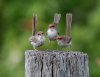
Yellow Thornbill. Yellow Thornbill.
Photo: K Vang and W Dabrowka / Bird Explorers © K Vang and W Dabrowka / Bird Explorers

Distribution map of Acanthiza nana Distribution map of Acanthiza nana
Map © Birds Australia Birdata

Facts and figures

Average size: 10 cm
Average weight: 6 g
Breeding season: July to March
Clutch size: 3 to 4
Incubation: 17 days

Calls

Harsh, scratchy two-note calls: 'tzid-id' or 'tzid-id, tis-tis'.

Call in MP3 format (219kb)
Copyright © Fred Van Gessel

Conservation status

Federal - Secure
NSW - Secure

Status of Australian Birds

Yellow Thornbill

Scientific name: Acanthiza nana
Family: Pardalotidae
Order: Passeriformes

Featured Bird Groups
Small insect-eating birds

What does it look like?

Description

The Yellow Thornbill is a small to medium-sized thornbill and is the most yellow of the thornbill group. It is greenish-olive on the back, with white streaking on the cheeks and ears, and has pale to bright yellow underparts. There is a reddish brown tone on the chin and throat. The young birds are similar but duller.

Similar species

The Yellow Thornbill can be distinguished from other thornbills by its olive upperparts, yellow underparts, orange chin and a dark eye. The similar sized Striated Thornbill A. lineata is readily distinguished by the heavy streaking on its face, chin and throat. Sometimes confused with other birds with yellowish underparts such as the Weebill and young Fairy or White-throated Gerygones.

Where does it live?

Distribution

The Yellow Thornbill is found throughout mainland eastern Australia, from Atherton Tableland, Queensland to eastern South Australia.

Habitat

The Yellow Thornbill is found in open forests, woodlands and shrublands which are dominated by Casuarinas, Acacias or paperbarks rather than eucalypts. Often seen in parks and gardens, preferring more established areas.

Seasonal movements

Sedentary.

What does it do?

Feeding

The Yellow Thornbill feeds mainly on insects, but may sometimes eat seeds. They feed almost exclusively in the foliage of trees, most often Acacias, paperbarks, casuarinas and native pines.

Breeding

Breeding pairs of Yellow Thornbills may sometimes have helpers to assist them with feeding the young. Females build a rounded domed nest, with a narrow, hooded entrance near the top, out of grasses, bark and other materials, lining it with feathers, fur or soft plant down. The nest is usually in twigs of upper tree branches. The female incubates the eggs alone, but both parents (and possibly helpers) feed the young.

Living with us

Living with humans

Researchers found that the Yellow Thornbill was not found in newer urban developments in one study, but was found in more established areas.

References

Serventy, V.N. (ed) 1982. The Wrens and Warblers of Australia. Angus and Robertson and the Australian Photographic Index of Australian Wildlife, Sydney.

Morcombe, M. 2000. Field guide to Australian Birds. Steve Parish Publishing.

Higgins, P.J. and J.M. Peter (eds) 2002. Handbook of Australian, New Zealand and Antarctic Birds, Volume 6: Pardalotes to Shrike-thrushes. Oxford University Press, Melbourne.

Members