Birds in Backyards

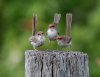
Dusky Woodswallow. Dusky Woodswallow.
Photo: K Vang and W Dabrowka © Bird Explorers

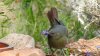
Dusky Woodswallow, with feathers fluffed up. Dusky Woodswallow, with feathers fluffed up.
Photo: K Vang and W Dabrowka © Bird Explorers

Dusky Woodswallow. Note white tail tips. Dusky Woodswallow. Note white tail tips.
Photo: K Vang and W Dabrowka © Bird Explorers

Distribution map of Artamus cyanopterus Distribution map of Artamus cyanopterus
Map © Birds Australia Birdata

Did you know?

Dusky Woodswallows swivel their tails in a 'tail wag' that is typical of the whole woodswallow group.

Facts and figures

Research Species: No
Minimum size: 17 cm
Maximum size: 18 cm
Average size: 18 cm
Average weight: 35 g
Breeding season: August to January
Clutch size: Three to four
Incubation: 16 days
Time in nest: 20 days

Calls

Brassy chirrups and chirps: 'vut vut'; also harsh chattering and some mimicry.

Call in MP3 format (314kb)
Copyright © Fred Van Gessel

Conservation status

Federal - Secure
NSW - Secure

Status of Australian Birds

Dusky Woodswallow

Scientific name: Artamus cyanopterus
Family: Artamidae
Order: Passeriformes

What does it look like?

Description

The Dusky Woodswallow is a smoky deep brown to grey bird. The wings are dark blue grey, edged white, the tail is black with a broad white tip and the underwings are silvery-white. The bill is blue tipped black and the eye is dark brown. Young birds are grey-brown, streaked and mottled buff to cream. This species moves in flocks of 10 to 30 birds, which cluster together to roost.

Similar species

The Dusky Woodswallow has a distinctive white patch on the outer wing. It tends to be more smoky brown than most of the other woodswallows, with the similarly coloured Little Woodswallow, A. minor, being much smaller (12 cm), darker and lacking the wing patch.

Where does it live?

Distribution

The Dusky Woodswallow has two separate populations. The eastern population is found from Atherton Tableland, Queensland south to Tasmania and west to Eyre Peninsula, South Australia. The other population is found in south-west Western Australia.

Habitat

The Dusky Woodswallow is found in open forests and woodlands, and may be seen along roadsides and on golf courses.

Seasonal movements

Nomadic; south-eastern population migrates north in autumn.

What does it do?

Feeding

The Dusky Woodswallow feeds on insects taken on the wing, as well as from foliage and on the ground. It also eats nectar from flowers.

Breeding

The Dusky Woodswallow nests colonially in 'neighbourhoods'. The nest is a loose bowl of twigs, grass and roots, lined with fine grass, and is placed in a tree fork, behind bark, in a stump hollow or in a fence post, about 1 m - 10 m above the ground. Each pair builds the nest, incubates the eggs and feeds the young.

References

Strahan, R. (ed) 1996. Finches, Bowerbirds and Other Passerines of Australia. Angus and Robertson and the National Photographic Index of Australian Wildlife, Sydney.

Simpson, K and Day, N. 1999. Field guide to the birds of Australia, 6th Edition. Penguin Books, Australia.

Members