Birds in Backyards

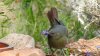
Paradise Riflebird. Paradise Riflebird.
Photo: N Lazarus © N Lazarus

Distribution map of Ptiloris paradiseus Distribution map of Ptiloris paradiseus
Map © Birds Australia Birdata

Did you know?

Paradise Riflebirds have the unusual habit of draping cast-off snake skins on the rims of nests. It is not known if the snake skins are for purely decorative purposes or whether they are also useful for scaring off potential nest robbers.

Facts and figures

Research Species: No
Minimum size: 28 cm
Maximum size: 30 cm
Average size: 29 cm
Breeding season: September to January
Clutch size: Two, occasionally one.
Incubation: 16 days
Time in nest: 28 days

Calls

A loud rasping 'yaaa-a-a-ss'

Call in MP3 format (219kb)
Copyright © Fred van Gessel

Conservation status

Federal - Secure
NSW - Secure

Status of Australian Birds

Paradise Riflebird

Scientific name: Ptiloris paradiseus
Family: Paradisaeidae
Order: Passeriformes

What does it look like?

Description

The Paradise Riflebird is a medium-sized, long-billed riflebird without plumes. The adult male is velvety black with a metallic oil-green sheen to crown, nape and upper breast shield. The tail is very short with iridescent (shining) blue-green central tail feathers. The remainder of underparts are velvety black with the tips of feathers an iridescent dark green. The bill long and curves strongly downwards. The female and immature have greyish-brown upperparts, rufous on the wings, a whitish eyebrow and throat. The underparts are buff with black 'horseshoe' markings.

Similar species

Victoria's Riflebird, Ptiloris victoriaea, is smaller (23 cm - 25 cm) and occurs only in north-eastern Queensland, from Cooktown to Mt Spec National Park near Townsville.

Where does it live?

Distribution

The Paradise Riflebird occurs in highland rainforests of the Great Dividing Range from central-eastern New South Wales north of Dungog to the Bunya Mountains, south-eastern Queensland. The most northerly population is isolated in the Calliope Range, east of Biloela, Queensland.

Habitat
The Paradise Riflebird is found in subtropical and temperate rainforests (including Antarctic Beech rainforest), mostly in mountains and foothills, and adjoining wetter eucalypt forests.

What does it do?

Feeding
The Paradise Riflebird is an active feeder, foraging like a treecreeper up tree trunks and along branches for insects, spiders and centipedes. The long curved bill is used to pry off large pieces of bark, to chisel into dead branches and to probe into crevices and rotten logs and stumps on the forest floor. They also feed on fruit and often feed together with other fruit eaters such as bowerbirds.
Breeding
During the breeding season, the gloriously plumaged male Paradise Riflebirds are vocal and conspicuous, spending most of the day on their display perches, which consist of one or more thick, horizontal branches high above the ground in a tall tree. They can be found both by their harsh calls in and around their display areas or by their rustling flight. Their display is spectacular, with the plumage sparkling green, blue or purple in the sunlight. The wings are fully extended and fanned upwards, and the head is thrown backwards to show the metallic, slightly erectile feathers on its throat, while the broad plumes of the belly and flanks are thrown slightly outwards in a circle. The adult females are very cryptic (hard to see) and their nests are not often found. The female alone attends to the nest which is a bulky, rough bowl of twigs, leaves, decorated with moss, orchids, sometimes snakeskins, placed high in dense foliage. The males are promiscuous, mating with many females.

Living with us

Living with humans

Much of the original habitat of the Paradise Riflebird - particularly lowland rainforest - has been cleared for agriculture and many of the remaining protected rainforest remnants are severely reduced and fragmented.

References

Pizzey, G. and Knight, F. 1997. Field Guide to the Birds of Australia. Angus and Robertson, Sydney.

Schodde, R. and Tideman, S.C. (eds) 1990. Reader's Digest Complete Book of Australian Birds (2nd Edition). Reader's Digest (Australia) Pty Ltd, Sydney.

Strahan, R. (ed) 1996. Finches, Bowerbirds and Other Passerines of Australia. Angus and Robertson and the National Photographic Index of Australian Wildlife, Sydney.

Members