Birds in Backyards

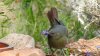
Black Currawong. Black Currawong.
Photo: K Vang and W Dabrowka © Bird Explorers

Black Currawong. Note massive bill. Black Currawong. Note massive bill.
Photo: K Vang and W Dabrowka © Bird Explorers

Black Currawong. Black Currawong.
Photo: K Vang and W Dabrowka © Bird Explorers

Distribution map of Strepera fuliginosa Distribution map of Strepera fuliginosa
Map © Birds Australia Birdata

Did you know?

The Black Currawong was widely eaten in the early days of European settlement in Tasmania and said to be quite tasty.

Facts and figures

Research Species: No
Minimum size: 47 cm
Maximum size: 49 cm
Average size: 48 cm
Average weight: 374 g
Breeding season: August to December
Clutch size: Two to four.

Calls

Noisy, musical 'kar-week, week-kar'

Conservation status

Federal - Secure
NSW -

Status of Australian Birds

Black Currawong

Scientific name: Strepera fuliginosa
Family: Artamidae
Order: Passeriformes

What does it look like?

Description

The Black Currawong is a medium-sized bird, with a heavy, black bill, black body and white tips to the flight-feathers and tail. It has a bright yellow eye. Immature birds are similar but duller in appearance.

Similar species
In Tasmania, the 'Black-winged' subspecies of the Grey Currawong, S. versicolor, is similar, but can be distinguished from the Black Currawong, by having white in its wings, a different call and a less massive beak. The Forest Raven, Corvus tasmanicus, lacks the white tail markings of the Black Currawong.

Where does it live?

Distribution

The Black Currawong is confined to Tasmania and its surrounding islands.

Habitat
The Black Currawong occurs in a range of habitats in Tasmania, including mountain and lowland forests, coastal heath, grazing lands and suburban areas.
Seasonal movements
The Black Currawong moves down from mountain areas to the milder lowlands in winter.

What does it do?

Feeding

The Black Currawong is omnivorous, feeding on young birds, carrion, insects and berries. It forages in the trees or on the ground.

Breeding

The Black Currawong builds a large, deep nest of sticks lined with roots and grass. Nests are usually found in the forks of trees 3 to 20 m high. The nestlings are fed by both parents.

Living with us

Living with humans
The Black Currawong was adversely affected by land clearing for farmland on King Island. It is sometimes considered a pest in orchards.

References

Pizzey, G. and Knight, F. 1997. Field Guide to the Birds of Australia. Angus and Robertson, Sydney.

Schodde, R. and Tideman, S.C. (eds) 1990. Reader's Digest Complete Book of Australian Birds (2nd Edition). Reader's Digest (Australia) Pty Ltd, Sydney.

Simpson, K and Day, N. 1999. Field guide to the birds of Australia, 6th Edition. Penguin Books, Australia.

Higgins, P.J., Peter, J.M. and Cowling, S.J. (eds) 2006. Handbook of Australian, New Zealand and Antarctic Birds, Volume 7 (Boatbill to Starlings) Part A. Oxford University Press. Melbourne.

Members